
7 Obstacle Training Benefits You Can Feel
The moment you have to swing, balance, climb, or land with control, your body has a job to do. You are not staring at a treadmill timer or counting down another set of reps. You are solving a physical challenge. That is why obstacle training benefits can feel so different from a standard workout: your mind is engaged, your body is moving with purpose, and every small win makes you want to try again.
For kids, teens, and adults, obstacle-based training turns fitness into something worth showing up for. It develops real athletic ability, but it also builds the confidence to face the next wall, rail, rope, or personal goal.
Why Obstacle Training Benefits More Than Muscles
Ninja-style obstacles ask your whole body to work together. Pulling strength matters, but so do foot placement, timing, grip, core control, mobility, and the ability to stay calm when a move does not go perfectly the first time.
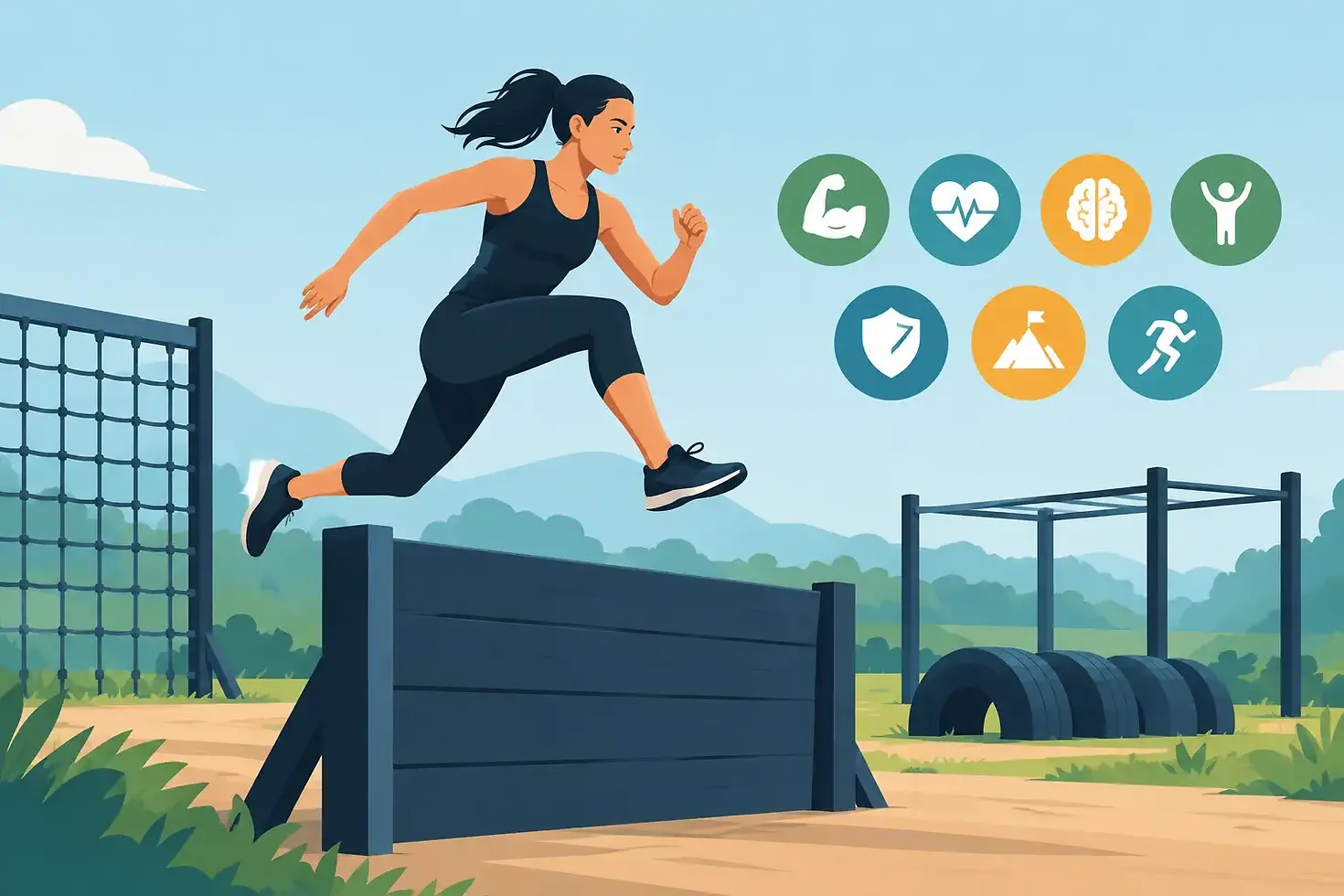
That makes obstacle training a form of functional fitness. The goal is not simply to lift more or run longer. The goal is to move better, react faster, and trust what your body can do. Here are seven benefits that keep people coming back for another round.
1. It Builds Full-Body Strength
A climbing wall, cargo net, monkey bars, or hanging obstacle gives your arms and back plenty of work. But your legs drive you upward, your core keeps you stable, and your hands have to hold on. Even obstacles that look simple often demand more total-body effort than people expect.
This type of strength is practical. Instead of isolating one muscle group at a time, you learn to create tension from head to toe while moving through space. Beginners can start with lower obstacles, assisted attempts, and shorter hangs. As skill improves, harder variations create a new challenge without making training feel repetitive.
2. It Sharpens Balance and Coordination
Balance is not just standing on one foot. It is being able to adjust your body when a surface shifts, a landing is uneven, or your momentum carries you farther than planned. Obstacles train those quick adjustments in a way that a flat gym floor rarely can.
Coordination improves because your brain has to connect a plan with movement. Where do your feet go? When should you reach? How hard should you push off? Kids often gain body awareness without thinking of it as exercise, while adults rediscover the athletic movement patterns they may not have used in years.
3. It Makes Cardio Feel Like a Mission
Not everyone enjoys running in place or spending 30 minutes on one machine. An obstacle course adds a reason to keep moving. You may sprint toward a wall, recover while balancing, then use a burst of energy for a climb. Your heart rate rises and falls as the course changes.
That variety can make conditioning more enjoyable and easier to stick with. The workout can be intense, but it does not have to be all-out from start to finish. A newer athlete may take time between attempts, while a more experienced participant can link obstacles together for a demanding endurance challenge.
4. It Develops Grip Strength and a Stronger Core
Grip is often the first thing people notice when they try ninja obstacles. Hanging, swinging, and traversing can make your hands and forearms work hard fast. Better grip strength supports climbing, carrying, lifting, and many sports, while also helping participants feel more secure on bars and holds.
Your core is just as busy. When your body swings under an obstacle or balances across a narrow surface, your midsection helps control rotation and keeps your hips from dropping. Crunches have their place, but moving through obstacles teaches the core to stabilize while the rest of the body is in action.
5. It Builds Confidence Through Real Progress
There is something powerful about reaching an obstacle that once stopped you and finally getting past it. The victory may be a first controlled landing, a longer dead hang, or getting one rung farther across a set of monkey bars. Those moments are earned, and they are easy to feel.
Obstacle training gives progress a visible shape. You can see the wall, touch the bar, and remember the last attempt. For children especially, that can create a healthier relationship with challenge. Falling short is not failure. It is information for the next try: adjust your grip, use your legs, slow down, commit.
6. It Teaches Resilience Without Making Training Miserable
Every obstacle has a learning curve. Some require strength. Others require timing or confidence. A person can be very fit and still need several attempts to understand a new movement. That is part of the fun.
Training in this environment encourages persistence because the feedback is immediate. You either clear the obstacle, get closer, or learn what needs to change. Coaches, friends, and family members can celebrate the effort along the way, creating a supportive setting where people are willing to try something that looks intimidating.
7. It Creates Active Fun People Want to Share
The best workout plan is the one you will actually keep doing. Obstacle training brings a social side that can be missing from solo exercise. Friends can take turns, kids can cheer for each other, and parents can watch confidence grow one attempt at a time.
It also gives families and groups a better kind of competition. The focus does not have to be on who is fastest. It can be about beating your own previous attempt, learning a new technique, or encouraging someone through a tough section. That shared energy turns movement into an experience, not another chore on the calendar.
Obstacle Training Benefits Depend on Smart Progression
A good challenge should push you, not overwhelm you. Obstacles are scalable, but people should begin at a level that matches their current strength, mobility, and confidence. Technique matters, especially on hanging, jumping, and landing movements. Taking time to learn a safe approach is part of becoming stronger.
Parents should look for an environment where kids can explore while receiving age-appropriate guidance. Adults returning to fitness should give their hands, shoulders, and elbows time to adapt instead of attempting every high-level obstacle on day one. Soreness can happen, especially after grip-heavy training, but sharp pain is a signal to stop and ask for help.
The trade-off is clear: obstacle training may not be the fastest route to a single narrow goal, such as maximizing a barbell lift or training for a long road race. But for people who want strength, conditioning, coordination, and confidence in one high-energy session, it offers a lot of value.
A Challenge for Every Age and Starting Point
You do not need to arrive able to swing across the gym or scale a warped wall. You only need the willingness to try. A young child may begin by balancing, stepping, crawling, and climbing. A teen may be ready to build speed and power. An adult may want a workout that feels less like a routine and more like a test of what is possible.
At Go Ninja, participants can train through challenges that make fitness feel active, social, and exciting. The obstacle in front of you is not there to prove you cannot do it. It is there to show you what happens when you keep moving, keep learning, and take one more attempt.


Comments