
Best Ninja Warrior Obstacle Course for Kids
Some kids burn through energy by sprinting circles in the backyard. Others want a real challenge - something to climb, swing, balance, and beat. That is exactly why parents start searching for the best ninja warrior obstacle course for kids. The right setup does more than keep them busy for an hour. It builds confidence, coordination, grip strength, and that try-again mindset every parent wants to see.
Not every obstacle course deserves the word best, though. Some are all excitement in the photos and frustration in real life. Others are great for one age group but too easy, too hard, or too cramped for another. If you are trying to choose wisely, it helps to know what actually makes a kids' ninja course worth your time and money.
What makes the best ninja warrior obstacle course for kids?
The best courses hit a sweet spot. They feel exciting right away, but they also leave room for progress. A good ninja course should challenge kids enough to keep them engaged without turning every attempt into a struggle.
That balance matters more than flashy features. A long line of obstacles looks impressive, but if your child cannot reach the holds, grip the rings, or safely move from one element to the next, the course stops being fun fast. On the other hand, if every obstacle is too simple, kids master it in a day and lose interest.
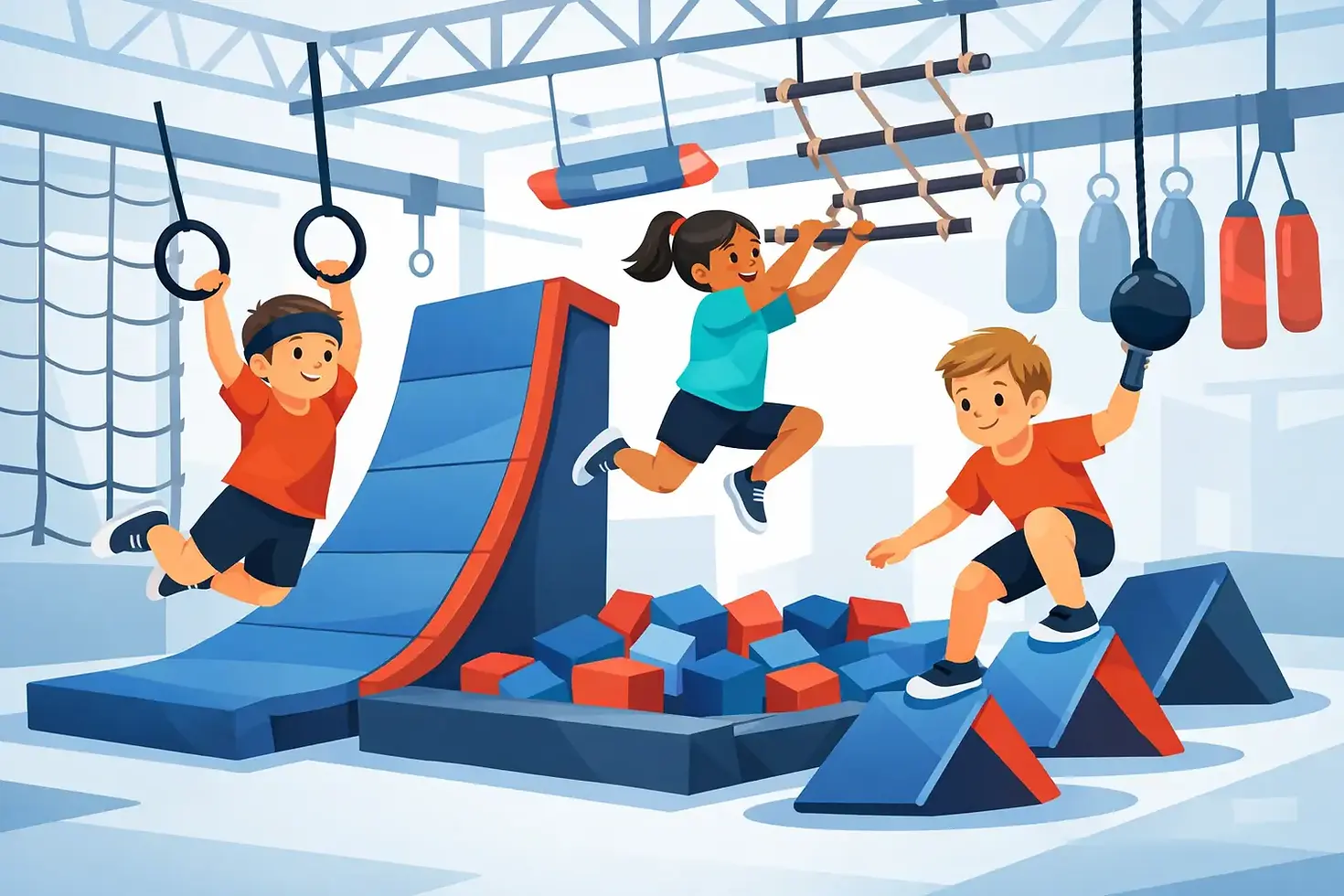
The strongest courses usually offer variety. Think swinging elements, monkey-bar style movement, balance challenges, climbing features, and space to move between obstacles without chaos. Variety keeps kids using different muscle groups and different problem-solving skills. It also helps siblings or friends with different strengths enjoy the same setup.
Challenge level matters more than size
Parents often assume bigger means better. Sometimes it does, but only if the obstacles fit the child using them. A compact course with smart design can be far more fun than a giant setup with awkward spacing and impossible transitions.
For younger kids, reachable grips and lower heights usually matter more than course length. For older kids, the course needs enough difficulty to feel like a real mission. That might mean harder grip elements, longer traverses, or more technical balance obstacles.
This is where age range becomes a real decision point. If you are shopping for one child, you can choose more precisely. If you are choosing for multiple kids, look for adjustability. A course that allows you to swap obstacles, change spacing, or vary difficulty will hold attention much longer.
Safety should be built into the experience
Parents do not want a boring activity, but they do want peace of mind. The best ninja warrior obstacle course for kids is exciting without being reckless. That means sturdy construction, clear weight guidance, secure anchor points, and enough room around the course for safe movement.
Surface matters too. Grass can work in some yards, but hard-packed dirt or concrete nearby changes the risk level. Indoor courses need padding and smart spacing. Outdoor courses need stable installation and regular checks, especially if the equipment stays exposed to sun and wind.
Safety is not just about materials. It is also about supervision and progression. Kids should be able to start with simple movements before jumping into harder combinations. The course should encourage learning, not just all-out chaos from the first minute.
The best courses keep kids coming back
The real test is not whether kids love it on day one. It is whether they still want to use it a month later. Great obstacle courses create repeat challenges. Kids want another shot at the ring swing, another attempt at crossing without falling, another chance to beat their previous run.
That replay value usually comes from skill progression. When children can feel themselves improving, the course stays exciting. A setup that supports climbing, swinging, balancing, and timed runs gives them multiple ways to measure success.
This is one reason structured ninja training works so well. Kids are not just burning energy. They are learning body control, patience, timing, and resilience. They fall, reset, and try again. That process is where the real win happens.
Backyard setup or real training environment?
This depends on your goal. If you want casual active play at home, a backyard obstacle course can be a great fit. It gives kids an easy way to move more, and it can turn ordinary afternoons into something much more active.
But there is a trade-off. Home setups usually have limits. Ceiling height, yard size, equipment quality, and supervision all affect how far kids can progress. Many backyard courses are excellent for fun and general fitness, but they may not offer the same variety or challenge as a dedicated ninja training facility.
A real training environment gives kids access to more obstacle types, better coaching, and a stronger sense of progress. It can also be better for families who want a safe place where kids can challenge themselves without parents having to design, install, and maintain equipment at home. For many active families, that difference is huge.
Signs a course is too easy or too hard
You can usually tell pretty quickly where a course lands. If a child runs through it once and then starts improvising because there is no real challenge left, it is probably too easy. If they cannot complete even the first few movements without constant adult lifting or frustration, it may be too hard.
The best experience sits in the middle. Kids should have early wins, but they should also have obstacles that take practice. That mix keeps motivation high. It builds confidence without removing the challenge.
Watch how your child responds after a miss. A well-matched course makes them want to try again. A poor match makes them quit or get reckless. That difference tells you almost everything.
Features worth looking for in a kids' ninja course
A few features consistently make a difference. Adjustable obstacles are a big one because they stretch the value of the course over time. Durable grips and strong support systems matter because kids use this equipment hard. Open space between elements is underrated, especially if multiple kids are using the course.
Balance obstacles are also more valuable than many parents expect. Swinging elements get the attention, but balance training develops control, focus, and body awareness. Courses that combine upper-body work with agility and footwork usually create a better all-around experience.
If the course is part of a gym or training center, look at more than the equipment itself. Coaching, cleanliness, class structure, and the overall energy of the space matter too. A strong environment can turn a good obstacle course into an experience kids genuinely look forward to.
Why kids respond so well to ninja-style training
Traditional workouts can feel like a chore. Ninja-style movement feels like a mission. That shift changes everything. Instead of being told to exercise, kids get to chase a challenge.
They are not counting reps. They are trying to cross the rings, clear the balance section, or make it farther than last time. That mindset keeps them engaged longer and often pushes them to work harder without even thinking of it as a workout.
That is one reason families in Lancaster and across the Antelope Valley are drawn to dedicated ninja training spaces. The format is active, social, and exciting. It gives kids a place to test themselves, build skills, and have fun doing it. At Go Ninja, that challenge-driven environment is exactly the point - fitness that feels like an adventure, not a chore.
How to choose the right fit for your child
Start with your child's age, confidence level, and movement style. Some kids love climbing right away. Others are more cautious and need a course that lets them build confidence in smaller steps. The best choice is not always the hardest course. It is the one that makes your child want to come back and improve.
Think about personality as much as skill. Competitive kids may love timed runs and tougher obstacles. Kids who are still building confidence may do better in an environment where they can learn at their own pace. Neither is better. It just depends on what helps them stay motivated.
If possible, watch a session before committing. Look for kids moving, smiling, resting, retrying, and staying engaged. That is a strong sign the course is doing its job.
The best ninja obstacle course for kids is the one that makes them feel strong, capable, and excited to take on the next obstacle. When a course does that, it becomes more than a way to burn energy. It becomes a place where confidence grows one challenge at a time.


Comments