
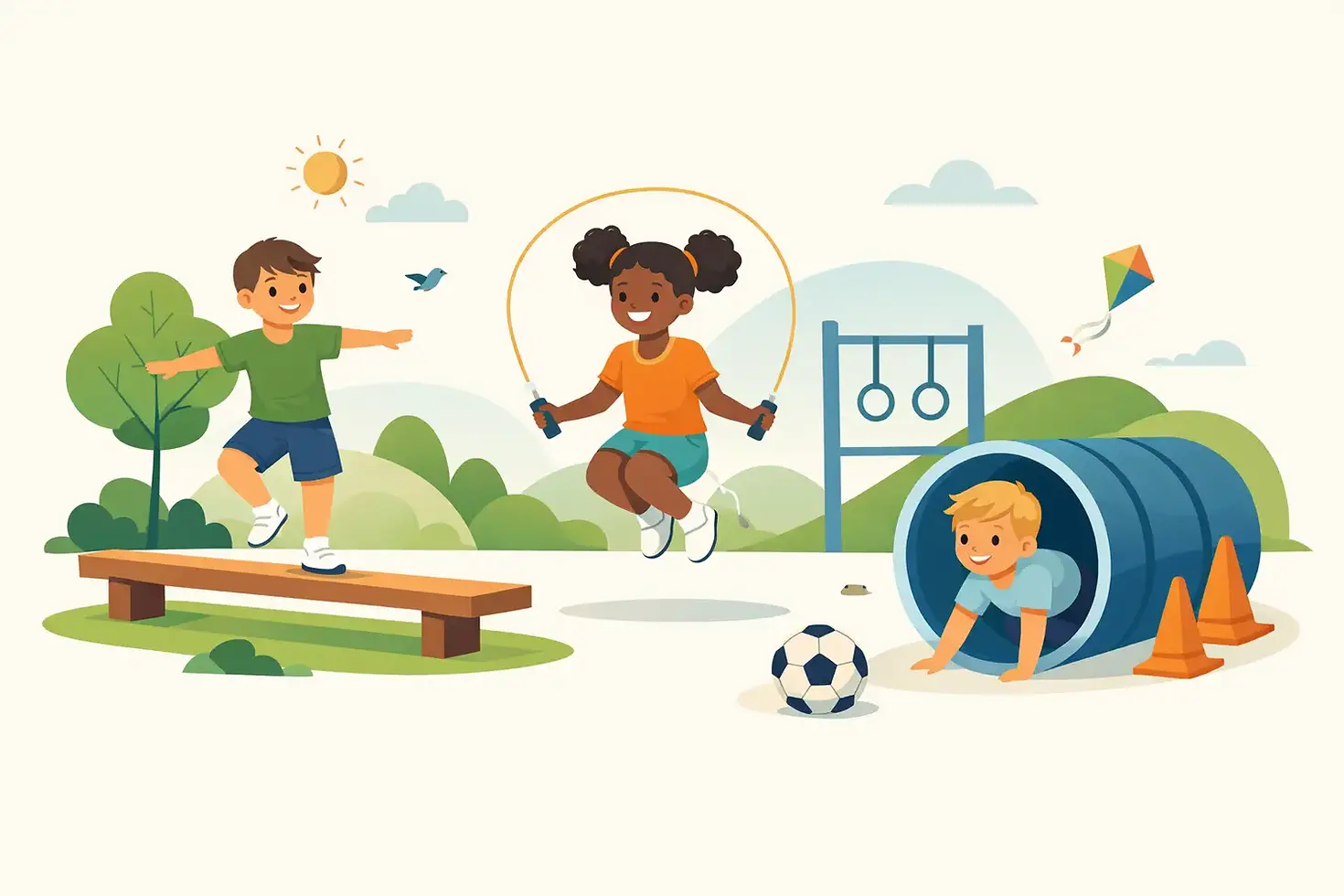
Functional Fitness for Kids Starts With Play
A child does not need a treadmill workout or a heavy barbell to get stronger. They need reasons to move: a wall to climb, a gap to clear, a bar to swing from, and a challenge worth trying again. That is where functional fitness for kids shines. It builds real-world movement skills while making exercise feel like play.
For parents, that matters because kids are more likely to stay active when movement is exciting rather than forced. For kids, it means every jump, crawl, balance hold, and climb becomes a chance to feel capable. The goal is not to create mini adults in a gym. The goal is to help young people move with confidence, strength, and control.
What Is Functional Fitness for Kids?
Functional fitness means training movements that help the body do everyday activities well. For kids, that includes running, jumping, landing, climbing, hanging, crawling, balancing, carrying, twisting, and changing direction. These are the building blocks behind playground play, school sports, hiking, bike riding, and the spontaneous games kids invent on their own.
A good program does not isolate muscles just for the sake of it. Instead, it teaches the body to work together. When a child swings across a set of rings, their hands, shoulders, core, and focus all have a job. When they jump from one stable surface to another and stick the landing, they are practicing leg strength, balance, body awareness, and safe deceleration at the same time.
Obstacle-based training is a natural fit because it gives movement a purpose. Kids are not simply told to do ten squats. They might squat low to move under an obstacle, then pop up and sprint to the next challenge. The exercise is still there. It just feels like an adventure.
Why Kids Benefit From Movement Challenges
The physical benefits are easy to see over time. Regular functional movement can improve coordination, agility, grip strength, mobility, balance, and cardiovascular endurance. These abilities can support athletic performance, but they are valuable for every child, whether they play a team sport or not.
The confidence benefits can be even bigger. A child who once avoided a climbing obstacle may need several tries before reaching the top. That process teaches persistence in a way a pep talk cannot. They learn that being challenged is not the same as failing. Sometimes progress looks like one more rung, a longer hang, or a cleaner landing than last week.
Functional fitness also gives kids a healthy outlet for high energy. Many children spend long stretches sitting at school, doing homework, or looking at a screen. Active play helps them reset physically and mentally. After moving, they often have a better chance to focus, regulate their energy, and feel more settled.
There is also a social side. Training with other kids can make challenges less intimidating. One child cheers when another reaches the end of an obstacle, then takes their own turn. That shared effort builds encouragement, patience, and a sense of belonging without turning every activity into a high-pressure competition.
The Skills That Matter Most
A well-rounded functional fitness program for kids should develop a mix of movement skills, not just one specialty. The best activities are scalable, so beginners can participate safely while more experienced kids have room to level up.
Balance and Body Awareness
Balance is more than standing on one foot. It is knowing where your body is while moving through space. Walking a balance beam, stepping across uneven platforms, holding a controlled landing, or navigating a narrow obstacle all help kids develop proprioception, the awareness that lets them move with more control.
This skill matters when they run on a field, ride a skateboard, climb a playground structure, or simply rush through a busy school hallway. Better body awareness can also help kids feel less awkward trying new physical activities.
Strength That Supports Play
Kids do not need adult-style strength training to build strength. Their own body weight provides plenty of resistance when activities are appropriate for their age and ability. Hanging from bars strengthens hands and shoulders. Crawling challenges the core. Climbing develops pulling strength. Squatting, jumping, and stepping up develop the legs.
The key is good coaching and smart progressions. A child who cannot complete an obstacle independently should be offered a safe modification, not pushed to muscle through poor form. Strength grows through consistent practice, not through making every session a test.
Safe Jumping and Landing
Kids love to jump, which makes landing mechanics one of the most useful skills they can learn. A controlled landing usually means bending at the hips, knees, and ankles, keeping the chest tall, and landing quietly rather than crashing down.
This does not need to be a lecture. Coaches can turn it into a game: Can you land like a ninja without making a sound? That simple cue teaches control while keeping the mood fun. It can also help young athletes build better habits for sports that involve running, jumping, and quick stops.
Problem-Solving Under Pressure
Every obstacle asks a question: Where should I put my hands? Should I go faster or slow down? Can I use my momentum here? Kids learn to make decisions with their bodies, then adjust when the first attempt does not work.
That is why obstacle training can be especially engaging for children who lose interest in repetitive exercise. They are not just moving. They are solving a physical puzzle.
What a Great Kids Program Looks Like
The right environment should feel energetic, but never chaotic. Kids need room to explore while adults maintain clear safety standards, structured turns, and age-appropriate instruction. A quality coach knows when to encourage a bold attempt and when to redirect a child toward a better starting point.
Variety matters, too. Repeating a skill is useful, but young athletes usually stay engaged when each session includes fresh challenges. One day may focus on balance and landing. Another may involve climbing, swinging, and grip strength. The variety keeps fitness from feeling like a chore and helps develop a broader movement foundation.
It also depends on the child. Some kids are ready to charge toward the tallest obstacle. Others need time to watch, practice a lower version, and build trust in their own abilities. Both approaches are valid. Progress should be measured against the child's starting point, not against the loudest or fastest kid in the room.
At Go Ninja, obstacle training gives kids a chance to build those skills in a setting designed to feel like a challenge they want to take on. For families in Lancaster and across the Antelope Valley, that can be a refreshing alternative to another routine workout or another afternoon indoors.
How Parents Can Support Active Confidence
Parents do not need to become coaches to support functional movement. The most helpful thing is often the language you use. Praise effort, focus, and willingness to try instead of only celebrating who finishes first. “You kept trying that climb” can mean more than “You won.”
Let kids take manageable risks. If an obstacle is age-appropriate and supervised, give them a moment to figure it out before stepping in. A little struggle can be productive. Of course, safety comes first: children should use equipment that is maintained, sized appropriately, and monitored by trained adults.
Outside of organized training, look for chances to keep movement normal. Walk the dog, race to the mailbox, play tag, visit a playground, or create a simple backyard course with safe household items. Kids do not need a perfect workout plan. They need frequent opportunities to move, explore, and discover what their bodies can do.
Fitness That Kids Want to Come Back To
The long-term win is not a child who has one great class. It is a child who starts to see movement as something they can enjoy for life. When fitness is connected to achievement, friendship, and fun, kids are more likely to choose activity as they grow.
Give them a wall to climb, a landing to stick, and a challenge that feels just a little bigger than yesterday. Then let them surprise themselves.


Comments