

Beginner Ninja Drills That Build Real Confidence
A first obstacle can feel bigger than it is. The bar looks high, the balance beam feels narrow, and suddenly everyone else seems to know exactly where to put their hands and feet. That is why beginner ninja drills should start with control, not speed. Build a few dependable movement patterns first, and obstacles become a challenge to solve instead of something to avoid.
Ninja training is not about being fearless on day one. It is about learning how to land, hang, balance, jump, and reset when a move does not go your way. Kids, teens, and adults all improve faster when the basics feel like a win.
Start With the Skills Behind Every Obstacle
A Ninja Warrior course may have rings, warped walls, monkey bars, angled steps, and balance obstacles, but the same foundations show up again and again. Grip strength helps you hold on. Balance helps you move with precision. Leg drive helps you jump and climb. Body awareness helps you make safer decisions in the air.
For a true beginner, the goal is not to copy the hardest move seen on a competition show. The goal is to own the easy version first. A clean, controlled step across a low beam is more valuable than a rushed attempt at a high obstacle with poor footing.
Use these four rules during every session:
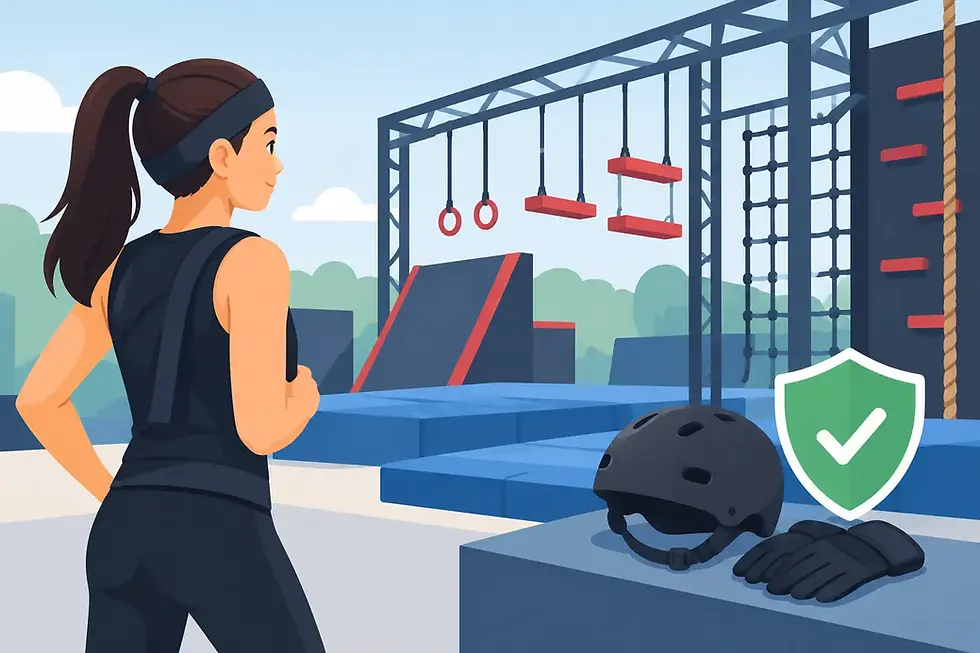
Start low, close to the ground, and add height only when control is consistent.
Practice quality repetitions instead of racing through an obstacle.
Rest before grip or technique falls apart.
Stop immediately for sharp pain, dizziness, or a joint that does not feel right.
A qualified coach and properly padded facility make a major difference, especially for young athletes. At home, keep drills low-risk and use clear floor space. Save hanging, swinging, vaulting, and elevated obstacles for a supervised gym environment.
Beginner Ninja Drills for Grip and Hanging
Grip is often the first surprise for new ninjas. Your legs may feel ready to go, but your hands can tire quickly when you hang from a bar or hold a ledge. The answer is not to squeeze harder until your forearms burn. Build time under tension gradually.
The Active Hang
Use a secure, low pull-up bar where the participant can step down safely. Hang with both hands, then gently pull the shoulders down away from the ears. Think tall chest, engaged upper back, and ribs not flaring forward. Hold for five to 10 seconds, rest, and repeat three to five times.
This small adjustment turns a loose dead hang into a stronger position for monkey bars, rings, and ledges. If hanging is too difficult, keep one or both feet lightly on a box or the floor for support.
Bar-to-Bar Weight Shifts
When an athlete can hold an active hang comfortably, practice moving body weight from one hand to the other without releasing either hand. Shift right, return to center, shift left. Keep the movement slow and avoid swinging.
This drill teaches the body what happens before a reach. It also reveals whether the shoulders are staying stable. Five shifts per side is plenty for a beginner.
Towel or Rope Grip Holds
A towel draped securely over a low bar creates a thicker, more demanding grip. Stand with feet on the floor, hold both ends, and lean back slightly while keeping the body straight. Hold for 10 seconds, then step in and reset.
This is a smart alternative to immediately climbing a rope. It trains the hands and upper back without asking beginners to manage height, fatigue, and foot technique all at once.
Build Balance Before You Add Speed
Balance obstacles reward patience. The fastest way across is usually not the best way across, especially at the beginning. New ninjas often stare at their feet, rush their steps, and stiffen their whole body. Instead, teach a soft athletic posture: knees slightly bent, arms available for balance, eyes looking ahead.
Line Walks and Beam Walks
Put tape on the floor or use a painted line. Walk heel to toe from one end to the other, pause for two seconds, then walk back. Once that feels easy, carry a light object, turn around halfway, or walk backward slowly.
Move to a low balance beam only after the floor version looks controlled. The height is not what makes balance hard. It is the ability to keep calm when the surface gets narrow.
Single-Leg Stick Landings
Stand on one foot, bend the knee slightly, and hold for five seconds. Then take a small step forward, land on one foot, and freeze. Keep the knee tracking over the toes rather than collapsing inward.
Stick landings are a powerful skill for stepping stones, precision jumps, and dismounts. They also help athletes recognize when a landing is not stable enough to continue. A ninja who can stop and reset is building confidence the right way.
Train Jumps Like a Ninja, Not Like a Daredevil
A precision jump is not about launching as far as possible. It is about knowing where you will land and having enough control to stay there. Beginners should begin with marked spots on the floor, then progress to low platforms or blocks under supervision.
Start with two-foot jumps from one line to another. Swing the arms back, bend at the hips and knees, jump forward, and land quietly with both feet. Hold the landing for two seconds. If the heels slam down, the knees cave inward, or the athlete hops to regain balance, shorten the distance.
From there, use a simple three-step progression: jump and stick, jump-turn-and-stick, then jump from a small raised surface to the floor. Each version teaches a different part of obstacle movement. The first builds accuracy, the second builds body awareness, and the third teaches safe force absorption.
Do not rush into big gaps because a friend cleared one. Distance depends on height, leg strength, confidence, and experience. A small jump landed perfectly is a real win.
Crawl, Climb, and Move With Purpose
Ninja training asks the whole body to work together. Crawling drills may look simple, but they expose weak core control and teach athletes how to move without wasting energy.
Bear crawls are a great starting point. Place hands under shoulders and knees under hips, lift the knees just off the floor, and take small opposite-hand, opposite-foot steps. Keep the back flat and move forward for 10 to 15 feet. Rest, then repeat.
For an extra challenge, try a low sideways crawl along a line. This helps athletes prepare for narrow spaces and side-to-side movement on obstacles. Keep it controlled. Fast, messy crawling turns a coordination drill into a race with no real payoff.
Low wall climbs are another useful progression when equipment and coaching are available. Start with a wall low enough to step onto, then practice placing one foot, driving through the leg, and bringing the opposite knee up. The key is to use the legs, not just pull with the arms. This same idea matters later on taller walls and steep ramps.
Put the Drills Into a Beginner Ninja Circuit
The best beginner sessions feel like play while still building real skill. Choose four or five stations and keep each one short. For example, an athlete might do active hangs, line walks, stick landings, bear crawls, and a low wall step-up. Spend 30 to 45 seconds at each station, rest as needed, and repeat the circuit two or three times.
Do not make every session identical. If grip is improving but balance is still shaky, give balance more attention. If a child is nervous about jumping, lower the target and celebrate the freeze after the landing. Progress is personal, and the right challenge should feel exciting, not overwhelming.
At Go Ninja, beginners can practice these skills in an obstacle-focused setting built for movement, challenge, and high-energy fun. The right environment helps athletes try new things while learning that a missed attempt is simply information for the next one.
What Progress Actually Looks Like
Progress is not only reaching a higher bar or clearing a wider gap. It can look like hanging two seconds longer, looking forward instead of down, landing without a stumble, or trying an obstacle again after slipping off. Those moments build the kind of resilience that carries beyond the gym.
Keep the challenge just outside the comfort zone, not miles beyond it. Show up, start low, and collect small wins. Before long, the obstacle that once looked impossible becomes the warm-up.

Comments