

7 Best Ways to Train Agility Like a Ninja
A missed foothold, a late jump, or a hand that cannot reach the next hold can change an entire obstacle run. That is why the best ways to train agility are not about simply moving faster. They are about teaching your body to react, adjust, balance, and keep going when the challenge changes.
For kids, teens, and adults, agility training should feel like a game with a purpose. You are building body control that carries over to obstacle courses, sports, playgrounds, races, and everyday confidence. The goal is not perfect movement on day one. The goal is to become more capable every time you train.
What Agility Really Means
Agility is the ability to move quickly and efficiently while changing direction or responding to something unexpected. It combines fast feet with balance, coordination, strength, reaction time, and awareness of where your body is in space.
Think about a Ninja Warrior-style course. You may need to sprint toward a platform, stop on one foot, jump sideways, grab an overhead hold, and swing into a landing. Raw speed helps, but it will not carry you through if you cannot control your body between movements.
Agility also looks different for every athlete. A young child may be learning how to land softly and switch directions without falling. A teen may be working on faster footwork and stronger takeoffs. An adult may be rebuilding confidence, improving balance, or preparing for an active event. Start where you are, then make the challenge just a little tougher.
The Best Ways to Train Agility Start With Footwork
Fast feet are useful, but purposeful feet are better. Before adding big jumps or advanced obstacles, practice stepping accurately. Set up floor markers, tape lines, cones, or even shoes spaced a few feet apart. Move through them forward, backward, sideways, and diagonally.
Keep your knees slightly bent and stay light on the balls of your feet. Your chest should remain tall enough that you can see where you are going. Beginners can walk the pattern first, then move into a quick shuffle. More experienced athletes can add a coach or partner calling out directions at random.
A simple 20-second footwork round can expose a lot: crossing feet when you should shuffle, looking down too long, or losing balance while changing direction. Those are not failures. They are clues for the next round.
Try a Four-Corner Drill
Place four markers in a square. Start in the middle, then move to a called-out corner and return to center. Use different movements - sprint forward, shuffle sideways, backpedal, or hop on one foot. The changing instructions train your brain as much as your legs.
For younger Ninjas, turn it into a color or number game. For adults, shorten the reaction time and focus on clean stops. Quality matters more than frantic movement.
Build Balance Into Every Session
Agility disappears when balance breaks down. A strong jump means little if the landing sends you stumbling off the next obstacle. Balance training teaches your body to stabilize quickly, especially on one leg.
Start with controlled single-leg holds. Stand on one foot for 10 to 20 seconds, keeping your hips level and your knee softly bent. Then make it more realistic: reach one hand toward the floor, turn your head, or step onto a low platform and hold the landing.
Balance work should not always be slow and still. Obstacle training demands dynamic balance, which means controlling your body after movement. Practice jumping from one line to another, landing quietly, and freezing for two seconds. If you cannot hold the landing, reduce the distance before adding speed.
This is especially valuable for kids. Learning to land with bent knees, eyes forward, and control over their arms helps make active play safer while building confidence for bigger challenges.
Train Change of Direction, Not Just Straight-Line Speed
Most real agility happens when you need to stop, turn, and accelerate again. A straight sprint is great for general athleticism, but an obstacle course asks for sharper control.
Set up two markers about five to 10 yards apart. Run to the first marker, plant your outside foot, turn, and drive back to the start. Focus on lowering your hips before the turn instead of trying to brake upright. The lower position gives you more control and helps you push into the next direction.
Do not rush into maximum speed. Sharp cuts put stress on ankles, knees, and hips when technique is poor. Begin at about 60 to 70 percent effort, master the plant-and-go motion, then build up. If your knees collapse inward or your feet slide, slow down and reset.
A fun variation is a mirror drill. Face a partner several feet away. One person leads with side shuffles, quick steps, and direction changes while the other mirrors the movement. Switch after 20 to 30 seconds. It is challenging, competitive, and much more engaging than running laps.
Add Jumps, Hops, and Safe Landings
Jumping is a major part of Ninja-style agility because it develops explosive power and body control at the same time. The key is not jumping as far as possible. The key is landing in a position that lets you move again.
Begin with small two-foot jumps over a line. Land softly with knees bent and feet about hip-width apart. Then progress to side-to-side jumps, short broad jumps, and jumps onto low, stable platforms. Each landing should be quiet. Loud landings usually mean you are dropping too hard or losing control.
Single-leg hops are useful once basic landing mechanics are solid. They challenge ankle stability and help prepare athletes for uneven steps, narrow platforms, and quick takeoffs. Keep the distance short at first. A controlled hop and stick is more valuable than a huge hop followed by a wobble.
For obstacle athletes, mix jumping with a task. Jump to a landing zone, turn 90 degrees, then reach for a target. That is closer to the real decision-making required on a course.
Use Obstacles to Train Reaction and Body Awareness
The best agility sessions do not have to look like traditional drills. Obstacles naturally create decisions: Where do I place my foot? Which hand reaches first? Should I slow down before this landing? Can I keep momentum without losing control?
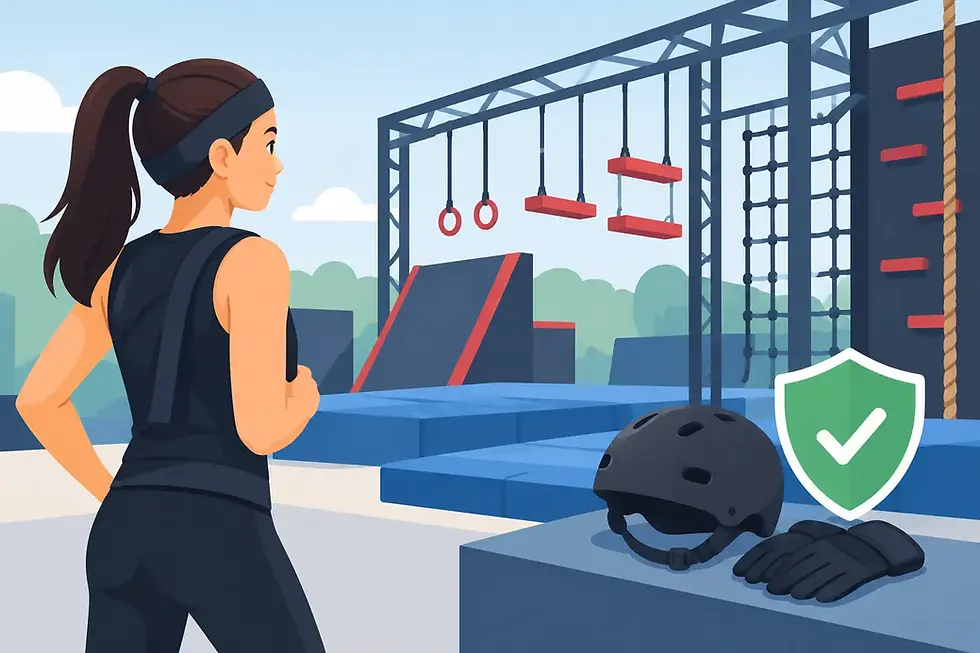
Low balance beams, stepping platforms, cargo nets, hanging elements, climbing walls, and traversing holds all challenge agility in different ways. They demand coordination between the eyes, hands, feet, and core. They also keep training exciting, which makes consistency far easier.
At Go Ninja, obstacle-based movement gives athletes a reason to practice these skills without staring at a treadmill clock. A course can be scaled for beginners who need more time and simpler routes, or pushed for experienced athletes ready to link movements under pressure.
The smart approach is to isolate a skill first, then connect it to an obstacle. Practice a controlled side jump on the floor before using it to reach a platform. Build grip and shoulder control before moving quickly through overhead obstacles. Speed comes after confidence and technique.
Train Your Eyes and Brain, Too
Agility is not only physical. Your brain has to recognize information and tell your body what to do. That is why reaction drills belong in the mix.
Have a partner point left or right, call a color, toss a soft ball, or change the route halfway through a drill. These unpredictable cues force you to react instead of repeating the same pattern. For athletes who play sports, this can transfer to defending, chasing, catching, and avoiding contact. For Ninja athletes, it helps with quick problem-solving when a movement does not go exactly as planned.
Keep reaction work playful. A quick game of follow-the-leader, a timed obstacle route with changing rules, or a partner challenge can create better effort than a complicated workout plan.
Make Agility Training Consistent
Two or three short agility sessions each week can create real improvement. You do not need an hour of drills every day, and doing too much too soon can leave joints and muscles sore. A focused 20- to 30-minute session is plenty when it includes a warm-up, quality movement, and rest between harder rounds.
Start each session by raising your body temperature with easy movement, then use dynamic actions such as leg swings, arm circles, light skips, and controlled squats. Save long static stretches for after training if they feel good to you.
Pay attention to fatigue. When footwork gets sloppy, landings become loud, or focus disappears, take a break or call it for the day. Agility training rewards sharp movement, not exhausted movement.
Choose one skill to improve this week - quieter landings, quicker side shuffles, steadier balance, or cleaner turns. Small wins build the confidence to face the next obstacle with more speed, more control, and a lot more fun.


Comments