

Ninja Safety Guide for Stronger, Smarter Training
That next obstacle can look like a challenge to attack at full speed. But the smartest ninjas know that progress comes from control, not reckless attempts. This ninja safety guide is built for kids, teens, adults, and families who want the thrill of obstacle training while building the habits that keep every session fun, focused, and ready for the next win.
Ninja training is different from a treadmill workout. You climb, swing, balance, land, grip, jump, and make quick decisions. That is exactly why it is exciting. It is also why safety starts before your feet leave the ground.
Start Every Ninja Session Ready
A great run begins with a quick body check. If something hurts sharply, feels unstable, or gets worse as you move, stop and tell a coach or parent. Being tough does not mean ignoring pain. It means making the smart call so you can train again tomorrow.
Warm up before tackling obstacles, especially after sitting in the car, at school, or at work. A few minutes of light movement can wake up your ankles, hips, shoulders, wrists, and core. Try easy jogging, arm circles, controlled squats, gentle hangs, and small jumps with soft landings. The goal is not to wear yourself out before training. The goal is to prepare your body to react well.
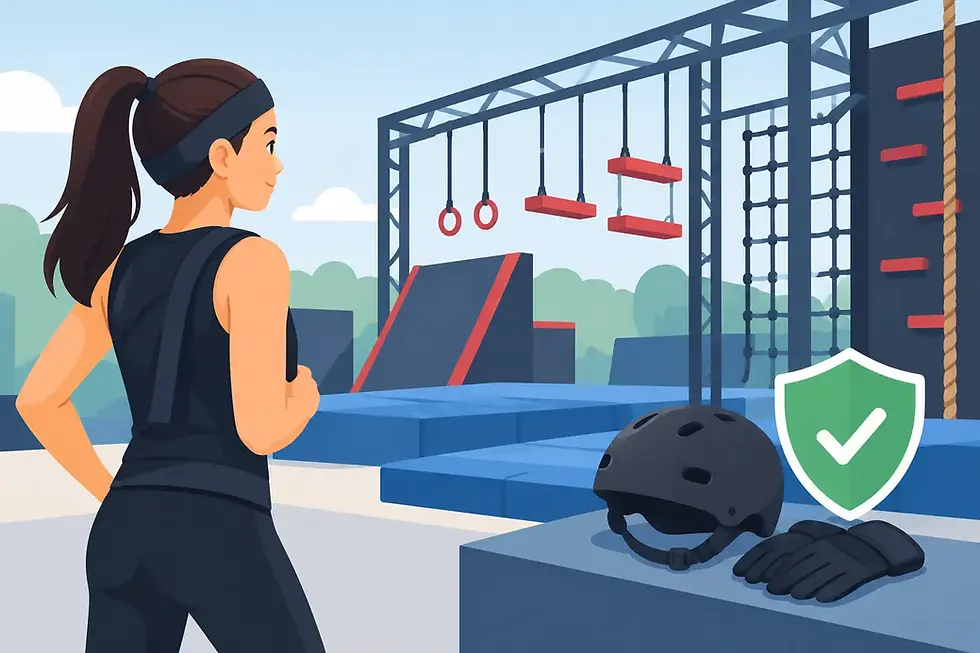
Your gear matters, too. Wear clothes that let you move freely without loose strings or baggy fabric that can catch on equipment. Athletic shoes with secure laces are usually the right choice for obstacle training. Remove jewelry that could snag, and keep long hair tied back when needed.
Before you begin, take a few seconds to check four things:
The obstacle and landing area are clear.
Your hands and shoes are dry enough for the movement.
You understand where to start, where to finish, and how to come down.
You know whether a coach has set a progression or rule for that obstacle.
That small pause builds awareness. Awareness prevents rushed decisions.
Learn the Obstacle Before You Send It
Every obstacle has a skill behind it. A warped wall asks for timing and drive. Rings demand shoulder control and grip awareness. Balance obstacles reward patience and foot placement. A big jump requires a safe landing plan before you ever take off.
Watch first when an obstacle is new. Notice how an experienced athlete positions their hands, where they look, and how they dismount. Then ask questions. There is no prize for pretending you already know what to do. A quick coaching cue can turn a frustrating attempt into a breakthrough.
Start with the version that matches your current ability. This is not backing down. It is how strong athletes develop real confidence. If you are learning to swing, begin with a controlled hang or a short swing before reaching for the biggest transfer. If you are working on balance, use the lower or wider option before moving higher or narrower.
For younger ninjas, adults should encourage effort without creating pressure to attempt something beyond their readiness. “Try the next level when you feel ready” is far more useful than “Don’t be scared.” Fear is information. It can tell a participant to slow down, listen, and build the skill in smaller pieces.
Land Like You Plan to Train Again
Safe landings are one of the most valuable skills in ninja training. Whether you are dropping from a bar, hopping off a platform, or missing a grab, your landing should be quiet, controlled, and balanced.
Aim to land with knees and hips bent, feet under your body, and your chest controlled rather than thrown forward. Avoid locking your knees or landing with straight legs. If you feel yourself falling, do not try to save an awkward position at all costs. Use the coached exit or let yourself come down into the designated padded area.
The height of the obstacle changes the decision. A small drop may be appropriate for a practiced participant who has been shown how to land. A higher obstacle, unfamiliar movement, or tired body calls for more caution. Take the safer route, use the intended descent, or ask for a spotter when the facility allows it.
Never jump toward another athlete, across an active lane, or into a landing zone you have not checked. Ninja training can move fast, but good traffic awareness keeps one person’s big moment from becoming another person’s collision.
Grip, Shoulders, and Smart Progressions
Grip obstacles can make you feel unstoppable right up until fatigue hits. That is why athletes need to recognize the warning signs: slipping hands, a weakening grip, uncontrolled swinging, or shoulders that feel strained rather than challenged.
Do not hang on just to prove a point. Release safely when you can no longer control the movement. It is better to reset and take another quality attempt than to turn a tired grip into an unsafe fall.
Shoulders deserve the same respect. Swinging, lache-style movements, monkey bars, and ring transfers all place demands on the shoulder joint. Build up gradually with hanging, scapular control, assisted swings, and shorter distances. Young athletes often have plenty of enthusiasm but are still developing strength and coordination. Adults returning to fitness may have the opposite challenge: motivation is high while connective tissues need more time to adapt. Both groups benefit from smart progressions.
Rest is part of the progression. Take a breather between hard attempts, drink water, and let your grip recover. Training through normal effort is one thing. Training through dizziness, unusual shortness of breath, sharp pain, or numbness is not. Stop and get help from a coach, parent, or qualified medical professional when needed.
Respect the Space and the People in It
Obstacle training works best when everyone shares the floor with awareness. Wait your turn. Give athletes room to finish before entering an obstacle. Keep personal items out of training lanes and padded landing areas. If you are coaching a friend, offer encouragement without standing where they may need to land or exit.
Parents can help by focusing on effort, technique, and good choices instead of only completed obstacles. Celebrate the kid who asks for help, tries a new progression, or chooses to step down after a tough attempt. Those are winning decisions.
At Go Ninja, the goal is not simply to get from one obstacle to the next. It is to develop the strength, coordination, resilience, and confidence that make each new challenge possible. Listening to coaches and following facility rules are part of that process, not interruptions to it.
The Right Mindset Makes Training Safer
The strongest ninja mindset is confident and coachable. You can be excited to test yourself while still respecting your limits. You can miss an obstacle without getting frustrated. You can watch someone else clear a challenge and use it as motivation rather than pressure.
Set one clear goal for each session. Maybe it is landing more quietly, keeping your eyes forward on balance, completing a controlled swing, or taking better rest between attempts. Small goals give you something useful to measure beyond whether you reached the buzzer.
Safety also means knowing when the day is not your day. Lack of sleep, dehydration, illness, sore joints, or a hard practice the day before can change what your body is ready to do. Adjusting your plan is not quitting. It is training with enough discipline to keep improving over time.
The obstacle will still be there next session. Show up prepared, listen to your body, and take the next challenge with control. That is how nervous first attempts become powerful finishes.

Comments