

Ninja Training Versus CrossFit for Real Life
A barbell on the floor and a warped wall in front of you can both make your heart race. But the experience is completely different. When comparing ninja training versus CrossFit, the best choice is not about which workout is tougher. It is about which challenge makes you want to show up again, build confidence, and keep moving.
CrossFit can be an excellent fit for people who love measurable workouts, strength progress, and high-effort conditioning. Ninja training is built for people who want fitness to feel like a game with real skills to chase: swinging farther, landing cleaner, climbing higher, and conquering the obstacle that stopped them last week.
Ninja Training Versus CrossFit: The Big Difference
CrossFit is generally built around constantly varied functional movements performed at different intensity levels. A class may include squats, deadlifts, Olympic lifts, rowing, running, pull-ups, kettlebell work, and bodyweight movements. Workouts are often timed or scored, which gives participants a clear way to track progress.
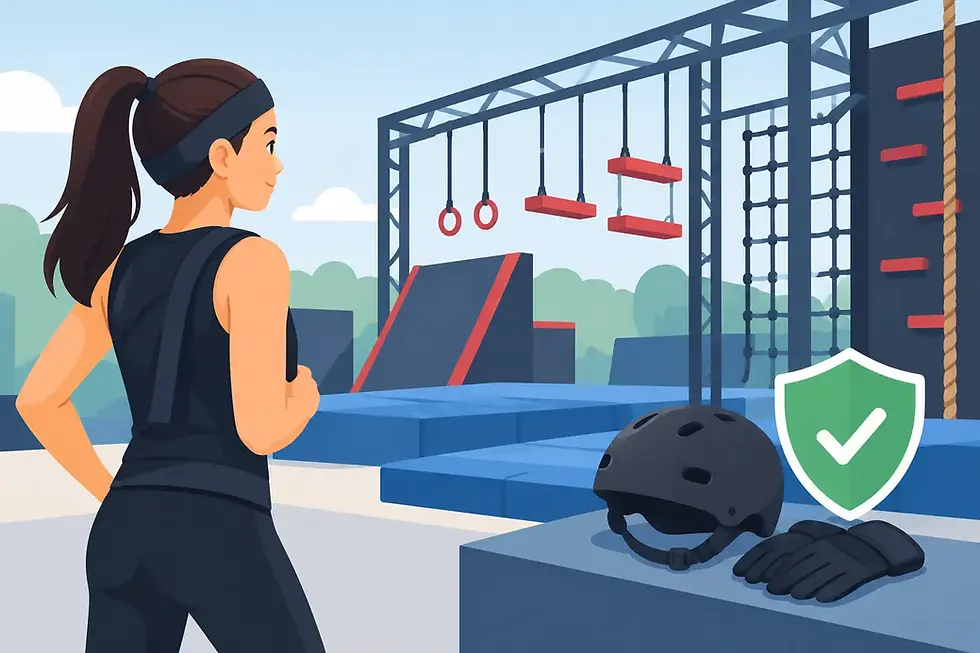
Ninja training uses obstacles and movement challenges as the workout. You may run, climb, balance, jump, swing, hang, crawl, and grip your way through a course. Strength and cardio still matter, but they have a mission. You are not simply doing pull-ups. You are building the pulling strength and body control needed to move from one obstacle to the next.
That difference matters for motivation. Some people love seeing a workout time on a whiteboard and trying to beat it later. Others light up when they finally stick a jump, clear a balance obstacle, or reach the top of a wall. Both approaches can improve fitness. They just make the process feel different.
What Each Workout Builds
CrossFit emphasizes strength and work capacity
A well-coached CrossFit program can build full-body strength, power, muscular endurance, and conditioning. It often includes loaded movements, so participants can progressively train with heavier weights over time. For adults whose main goal is getting stronger, improving lifting technique, or developing high-output conditioning, that structure can be very effective.
The trade-off is that some movements require technical instruction and attention to form, especially when fatigue is high. Not every beginner is ready to jump into advanced barbell work or fast, high-volume workouts. The right gym scales movements and loads to the person, not the other way around.
Ninja training emphasizes athletic movement and skill
Ninja obstacles challenge grip strength, shoulder stability, coordination, balance, mobility, agility, and problem-solving. Your body is constantly learning how to move through space. That makes training feel active, creative, and less repetitive than a standard workout routine.
It is also a powerful confidence builder. A participant who once struggled to hang from a bar may eventually swing across a lane. A child who hesitates at the first platform can learn how to take a breath, commit, and try again. The physical win is real, but the mental win often lasts longer.
Ninja training still develops strength. Hanging, climbing, pulling, carrying, landing, and jumping demand serious full-body effort. The difference is that the strength work is tied to movement goals rather than a number on a bar.
Which Is Better for Beginners?
For many beginners, ninja training feels more approachable because there is no expectation that everyone must perform the same movement in the same way. Obstacles can be adjusted, attempted in stages, or practiced repeatedly. You can work on one skill while another person focuses on a completely different challenge.
That flexibility is especially helpful for kids, teens, and adults returning to exercise after time away. Progress is easy to feel. Maybe you hang for five seconds today, then 10 next week. Maybe you make it one platform farther. Those small wins create momentum without making fitness feel like punishment.
CrossFit can also work for beginners when coaches provide smart scaling, clear instruction, and an encouraging environment. If you are excited by strength training and enjoy a structured class format, it may be a great match. But if the thought of a heavy barbell or a clock counting down makes you want to skip the workout, a ninja gym may be the better starting point.
The Fun Factor Is Not a Small Thing
People often treat fun as a bonus. It is not. It is one of the biggest reasons people stay active.
A workout only helps if you keep doing it. Ninja training turns exercise into a challenge-driven experience, which can be a major advantage for people who get bored with treadmills, weight machines, or repeating the same circuit every week. You are focused on the next obstacle, the next technique, or the next personal best. Before you know it, you have spent an hour moving hard.
That is why obstacle training works so well for active families. Kids are not being told to "exercise." They are climbing, swinging, racing, and learning skills. Adults get the same benefit without having to pretend that fitness has to be serious every second to count.
At Go Ninja, participants can train in an environment designed around that feeling: challenge first, growth always. It is a place to build real athletic ability while having a blast doing it.
Consider Your Goals Before You Choose
Choose CrossFit if you are energized by lifting, want consistent exposure to strength and conditioning workouts, and enjoy tracking loads, rounds, reps, and times. It can be a strong choice for adults who want a demanding group-training environment and are ready to learn technical movements.
Choose ninja training if you want to improve coordination, agility, grip strength, balance, and body control while working toward visible skills. It is a natural fit for Ninja Warrior fans, kids who need a more exciting way to be active, teens who want athletic confidence, and adults who want to train without feeling trapped in a routine.
You do not have to treat it as an either-or decision forever. Some athletes use CrossFit to build strength and conditioning, then use ninja training to improve movement quality and obstacle skills. Others start with ninja training because it gets them moving consistently, then add strength work later as their goals change.
Safety and Coaching Matter More Than the Label
The quality of coaching matters more than the name on the door. A great program meets you where you are, teaches sound technique, and makes progression feel earned instead of rushed.
For CrossFit, that means learning how to squat, press, pull, and lift with control before chasing heavier weights or faster scores. For ninja training, it means learning safe landing mechanics, shoulder positioning, grip management, and how to attempt obstacles at the right level.
Parents should look for an environment where kids are coached, encouraged, and challenged without being pushed past their current abilities. Adults should look for the same thing. Getting stronger is exciting. Staying healthy enough to keep training is the real goal.
Your Best Workout Is the One You Will Return To
There is no prize for choosing the workout that looks hardest from the outside. The right training style is the one that makes you feel capable, challenged, and ready to come back.
If you love barbells, benchmark workouts, and chasing numbers, CrossFit may be your arena. If you want to swing, climb, balance, and overcome obstacles while getting seriously fit, ninja training may be calling your name. Try the challenge that makes you forget you are exercising, then give yourself enough time to see what you can do.


Comments