
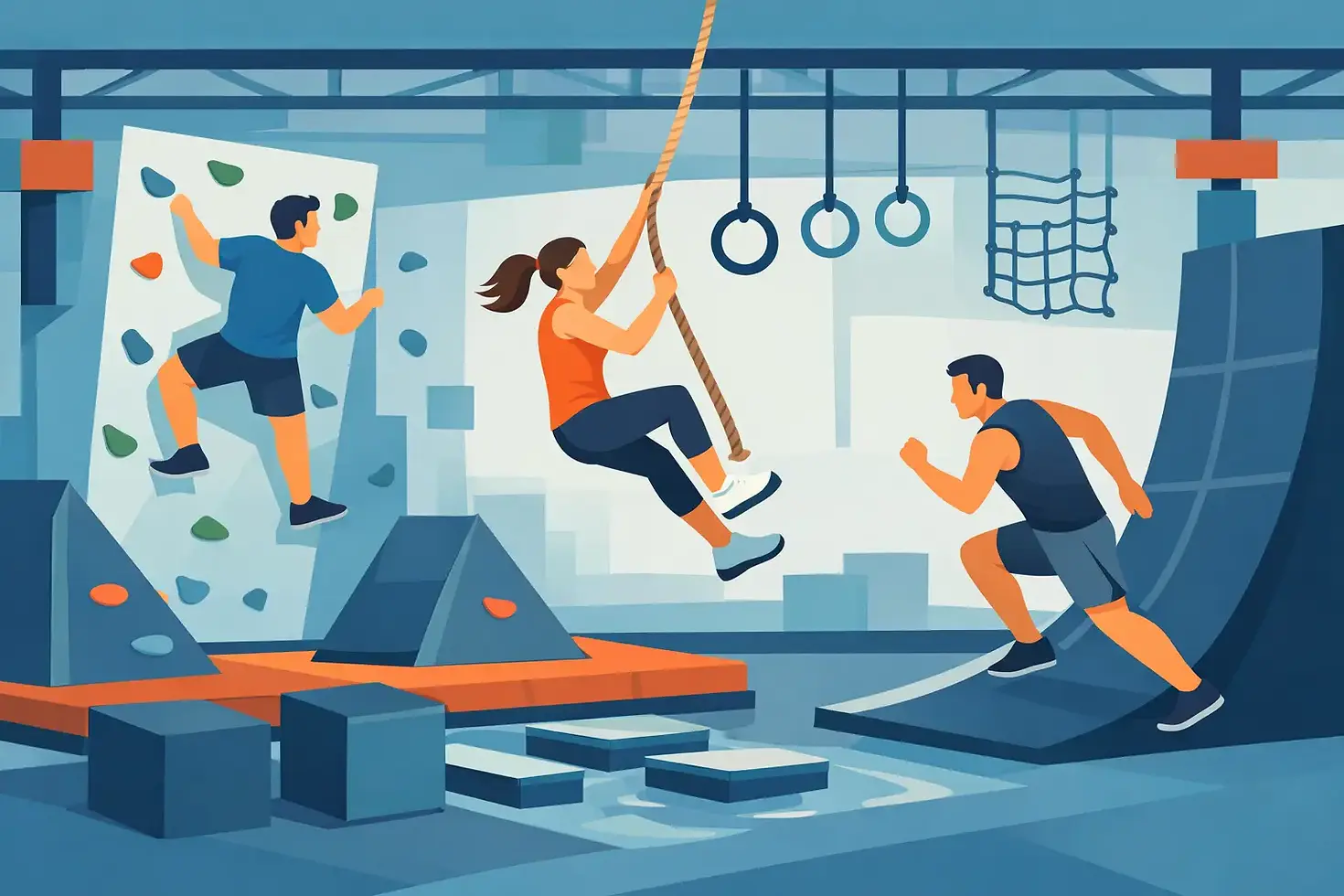
Why Open Gym Obstacle Practice Works
One missed grip can tell you more than thirty minutes on a treadmill. That is the beauty of open gym obstacle practice. You are not just working out - you are testing timing, body control, recovery, focus, and the ability to keep going when a move does not click on the first try.
For kids, teens, and adults who get bored with standard gym routines, this kind of training feels different right away. You have a target in front of you. You can see the obstacle, try the movement, adjust, and try again. That instant feedback makes practice more engaging, and it often makes people work harder without feeling like they are grinding through exercise.
What open gym obstacle practice actually gives you
The biggest advantage is freedom with purpose. In a class, there is a lesson plan. In open gym, you get room to explore, repeat problem areas, and spend more time on the skills that need work. If one obstacle is exposing weak grip strength, you can stay with it. If balance is your issue, you can put more energy there. If your kid is building confidence, open time lets them repeat a win until it feels real.
That flexibility matters because obstacle training is not one-size-fits-all. A beginner may need to learn how to swing safely, land correctly, and use momentum. A more advanced athlete may be dialing in transitions between obstacles, trying to move more efficiently, or pushing speed without losing control. Open gym works for both because it creates space for self-paced progress.
There is also a mental side that people underestimate. Obstacle work asks you to fail in public sometimes. You miss the hold. You slip off the ring. You hesitate on a jump you know you should make. Then you reset and go again. That kind of repetition builds resilience in a way that feels practical, not preachy. You learn to stay calm, make quick corrections, and trust your body more over time.
Open gym obstacle practice vs. regular workouts
Traditional workouts can absolutely build strength and conditioning. But they often separate fitness into pieces. You do reps for one muscle group, then move on. Obstacle training blends everything together. Grip, core, shoulders, balance, coordination, reaction time, and endurance show up in the same run.
That is why open gym obstacle practice can feel so addictive. The training is physical, but it is also a puzzle. You are solving movement problems in real time. Which hand should move first? Should you generate more swing or slow down and control the transfer? Are you failing because you are weak, or because your timing is off? Those details keep people mentally engaged.
It also tends to be more social than a standard gym floor. Families can train in the same space at different levels. Friends can challenge each other. Kids see other athletes attempt tough movements and realize progress is built through effort, not perfection. That atmosphere can be a huge difference-maker for people who want fitness to feel exciting instead of repetitive.
How beginners should approach open gym obstacle practice
The smartest way to start is not by chasing the hardest obstacle in the building. It is by building clean movement patterns first. That means paying attention to basic hangs, controlled swings, stable landings, and body awareness on simple obstacles before jumping to advanced combinations.
Beginners usually improve fastest when they focus on consistency instead of intensity. One strong hour of practice with good rest and repeated attempts on manageable skills will beat random all-out effort. If you burn out in the first fifteen minutes, the quality of your training drops fast. Open gym is not about proving something on every obstacle. It is about stacking small wins until tougher movements stop feeling impossible.
It also helps to pick one or two goals for the session. Maybe the goal is to clear a balance obstacle without stepping off. Maybe it is to hold body tension during a swing. Maybe it is simply to attempt a movement that looked intimidating last week. A little structure keeps open practice productive.
Why kids and teens benefit so much
Kids do not always respond to fitness language. Tell them they are building shoulder stability and coordination, and you may get a blank stare. Give them a warped wall, balance challenge, or hanging obstacle, and suddenly they are all in.
That is one reason obstacle-based training works so well for young athletes and active kids. They are moving with intention, but it still feels like play. Open gym gives them a chance to test themselves, build confidence, and use energy in a way that is healthy and focused. For many parents, that matters just as much as the physical training.
Teens often benefit in a different way. At that age, confidence can be shaky, and not everyone connects with team sports or traditional gym culture. Obstacle practice gives them an individual challenge with visible progress. You either reached the next hold or you did not. You either improved your control or you need another round. That clarity can be motivating.
There is a trade-off, though. Open sessions are most effective when athletes stay engaged and practice with intention. If a younger participant treats it like random free play, progress will be slower. Fun matters, but guided focus matters too.
What adults get out of it
Adults often come in expecting a fun challenge and end up realizing how demanding obstacle work really is. It exposes weak links fast. Grip gives out. Shoulders fatigue. Core control becomes the difference between a smooth transition and a missed catch. That honesty is part of the appeal.
For adults who hate repetitive workouts, obstacle practice gives fitness a clear purpose. You are not just counting reps. You are training your body to do something. That can make consistency easier, especially for people who have struggled to stick with standard gym routines.
It is also adaptable. Some adults want a serious training session. Others want an active outing with their kids. Some are rebuilding confidence after time away from exercise and need an environment that feels challenging but not judgmental. A good open gym setup supports all three. That is a big reason places like Go Ninja stand out for families who want more than a basic workout.
How to make each session count
A strong session usually starts with a real warm-up. Not a rushed shoulder roll and one quick stretch. Obstacle work demands a lot from hands, shoulders, hips, and core, so preparing those areas matters. If you skip that step, your performance and your safety both take a hit.
Once you are warm, focus on quality attempts. Watch what happened on the miss. Did you lose momentum, grip too early, or swing too wide? Good obstacle athletes do not just repeat the same mistake louder. They make one adjustment at a time and test it.
Rest matters more than many people think. Because obstacles involve power, coordination, and grip, too much fatigue can turn useful practice into sloppy practice. If you want better results, take enough recovery between hard attempts to stay sharp.
It also helps to balance challenge with success. If every obstacle is too easy, progress stalls. If every obstacle is too hard, frustration takes over. The sweet spot is a mix - a few things you can do, a few things you are close to getting, and maybe one stretch goal that pushes you.
The confidence piece is real
There is something powerful about seeing yourself do what looked impossible a month ago. Maybe it is your first controlled lache. Maybe it is getting farther on a hanging sequence than you ever have before. Maybe it is simply trying something without talking yourself out of it.
That is why obstacle practice tends to stick with people. The progress is visible. You feel stronger, but you also see proof of it. For kids, that builds self-belief. For teens, it can create momentum. For adults, it is a reminder that growth does not stop just because life gets busy.
And unlike workouts that feel disconnected from real movement, obstacle training gives confidence a physical form. You can grab, jump, swing, balance, and recover better than you could before. That carries over into the way people approach challenge in general.
Is open gym obstacle practice right for everyone?
Not always in the same way. Some people thrive on independent repetition. Others need the structure of classes to make the most of their time. Some athletes use open gym to sharpen specific skills, while beginners may benefit from mixing open practice with coaching so they build strong fundamentals.
That is the real value of it - not that it replaces every other kind of training, but that it gives people a dynamic way to build fitness, confidence, and skill all at once. If you want movement that keeps you thinking, working, and coming back for more, open gym obstacle practice is hard to beat.
Show up ready to try, miss, adjust, and try again. That is where the good stuff happens.


Comments